
A service of All World Construction LLCCSLB #1063936
All World ConstructionAll World Construction LLCCity Heights Electrical services619-327-9513

City Heights Electrical · AWC

Plan who loses power, for how long, and who approves the window.

Plan City Heights electrical outages around occupants, approval authority, essential equipment, panel access, communication, and restoration.

Serving City Heights near the Urban Village and Fairmount Avenue.

An electrical outage in an occupied home, rental, or storefront affects people as well as circuits. Planning starts by identifying the approving party, affected rooms or units, panel access, essential equipment, and a realistic interruption window. The electrical scope still depends on verified equipment and circuit conditions. A written outage plan gives occupants and property representatives a clear sequence without promising an exact restoration time before the field conditions are known.

Map affected spaces and responsible contacts

List each room, unit, tenant area, or business function that may lose power. Identify the owner or manager who approves work, the person who provides entry, and the contact who can notify occupants. Record essential equipment and access restrictions for qualified review. This inventory supports the outage plan; it does not establish which loads share a circuit.

  • Identify the person authorized to approve the work and outage.
  • List occupied spaces and any essential equipment needing review.
  • Confirm panel, room, gate, parking, and work-area access.

Verify the electrical limits before setting the window

Qualified personnel should evaluate the applicable panel, circuit, equipment, labels, accessible conductors, and conditions relevant to the work. Existing labels and occupant descriptions can help organize testing but may not match actual routing. The verified scope determines which areas need interruption and whether separate work stages are practical.

Set communication, access, and stop points

The written plan should state the expected outage window, affected areas, notification responsibility, entry sequence, and the person authorized to make decisions if conditions differ. Define a stop point for hidden conflicts or scope expansion. Confirm permit, inspection, utility, property, or other review responsibilities for the actual work and address.

Document completion before finishes close

The project record should identify installed equipment, routing, protection, labeling, applicable testing, and required review. Concealed work should remain available until it is ready for closure. Photograph the route where practical and obtain authorization before changing it because of a hidden conflict. Then complete the specifically included backing, wall, ceiling, stucco, texture, or paint restoration.
AWC company-work example

Coordinate access. Define the evaluation. Document the next decision.

This documented AWC example is from the company work library and is not presented as a City Heights project.

Accessible observations became a written decision record.

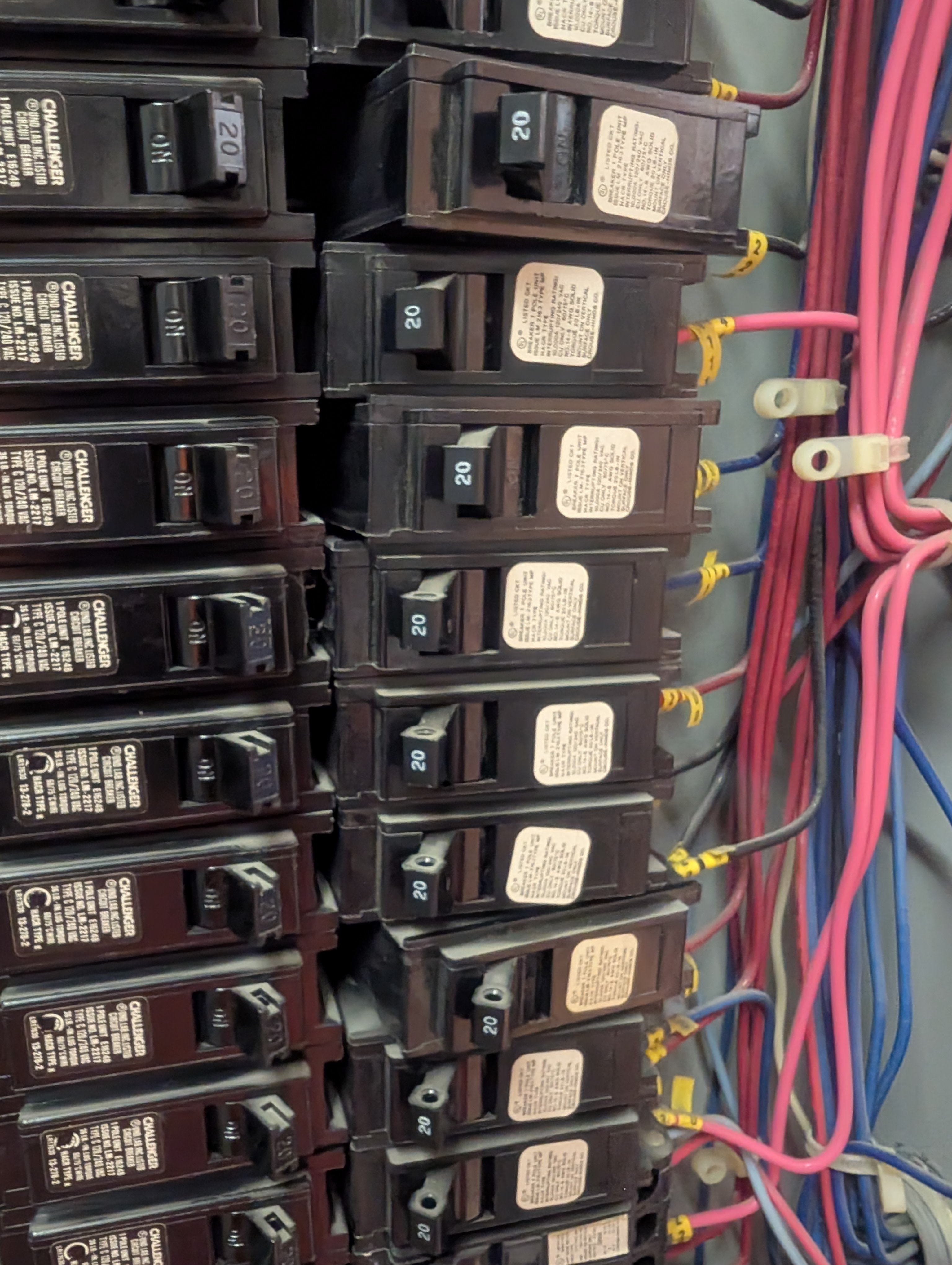
AWC coordinated site access with the property representative and a licensed electrical contractor, then reviewed accessible service and distribution equipment. The evaluation covered visible equipment, enclosures, access, obstructions, door operation, and available labels and ratings.

Observed conditions and follow-up areas were photographed. The written findings organized recommendations by immediate, near-term, and longer-term priority and were delivered electronically for review.

Project-planning lesson

Start with authorized access, state what the evaluation can and cannot cover, document the observable condition, and approve any correction under a separate written scope.

Evaluation boundary: This was an accessible, observable snapshot. It did not include repairs, equipment changes, engineering, utility work, or corrective construction. Any shutdown or corrective work required its own separately approved plan.

Close view of existing circuit breakers and wiring photographed during a limited electrical evaluation
Existing electrical equipment photographed during an AWC-coordinated limited evaluation. Company work example; not presented as a City Heights project or completed correction.

Before you book

Good questions.
Clear answers.

Can the outage duration be confirmed from photos?

Photos help plan the review. A realistic interruption window depends on verified circuits, equipment, access, the approved work, and any utility or inspection coordination.

Who notifies residents or business occupants?

The written plan should name the responsible owner or manager contact, affected spaces, expected window, and how changes will be communicated.

What if essential equipment needs continuous power?

Identify it before scheduling. Qualified personnel and the responsible property contact must resolve the equipment needs and an appropriate continuity plan before an outage is approved.

Useful before you approve work

Related AWC reading

Practical AWC notes about assessment, access, occupied spaces, and restoring finishes around the electrical work.

See the work in context

AWC electrical and restoration videos

Field clips and project walkthroughs from AWC. These company-library examples are not presented as City Heights projects.

Videos open on YouTube. Your property still needs its own qualified assessment and written scope.

Plan the connected work

Related electrical guides

Start with a conversation

Tell us what you see.
We’ll help define the next step.

City Heights · Electrical · AWC